Computer Science & Information Technology
Research Groups

Algorithm Research Group (ARG)
The Algorithm Research Group is led by Dr. Shakeel Arshad. The Algorithms Group performs fundamental research in the area of Genetic Agorithm and Machine learning. The group's interests are broadly in theoretical computer science, and more specifically, they include approximation algorithms, computational geometry, distributed algorithms, and randomization.
Team Members
Dr. Shakeel Arshad Assistant Professor
Abdul Ahad PhD Scholar - Lecturer (HED KP)

Muhammad Fayaz PhD Scholar
Virtual Reality & Intelligent Systems (VRIS)

The aim of Virtual reality and intelligent system research group is to utilize Virtual Reality (VR) and Augmented Reality (AR) for Assistance, Rehabilitation, Education and Training.
In this context our product "navigator for visually impaired people(NVIP)" and research in virtual chemistry laboratories are worth mentioning.
Our research particularly focuses in the following areas- Virtual Reality / Augmented Reality / Mixed Reality / Extended Reality
- 3D Interaction Techniques
- Haptic Interfaces
- Collaborative Virtual Environments (CVEs)
- Multi-Modal Interfaces
- Internet of Things (IOT)
Team Members
Dr. Sehatullah Associate Professor
Dr. Shah Khalid Assistant Professor
Dr. Aftab Alam Assistant Professor
Network Systems and Security Research Group (NSSRG)

The group prime objective is to provide a stimulating research environment for network and security research. In addition, to commercialise the research being done in CS & IT department, NSSRG aims to collaborate with the industry to solve real world networking problems in terms of network design, assessment, development management and services. NSSRG having a team of highly competent and energetic faculty members who works on projects that comprises a diverse range of reach, including distributed systems, Wireless and Peer-to-Peer networks, Sensor Networks, Network Security, and Network simulation and modelling.
We CoverThe network system and security side involves in both theoretical and experimental research, while use simulation and modelling techniques to study the fundamental problems in networking and security. Research in NSSRG also covers a broad range of topics including Online social networks, Wireless sensor networks, Body area networks, Ubiquitous sensor networks, Mobile ad-hoc network, Identity based-attacks in wireless networks, Modelling and analysis of networks, Stochastic simulation, and VoIP network protocols.
We InspireTo stimulate and inspire young MS and Ph.D researchers, in our research group we conduct regular group meetings to discuss our current research and results. The group also organize talks, research seminars and workshops to facilitate cross-disciplinary discussion on topics of common interest. We welcome your visit to our research lab and any inquiry about research collaboration or joining our research group and efforts.
Team Members
Dr. M Zahid Khan Assistant Professor
Dr. Haseeb Ur Associate Professor
Mr. Anwar Ul Haq Lecturer

Dr. Muhammad Faisal Lecturer / BS (CS) Coordinator
Mr. Rahat Ullah Khan Lecturer
Software Engineering Research Group (SERG)

Software Engineering Research Group, University of Malakand (SERG_UOM) is the pioneer research group at the Department of Computer Science and IT, established in 2011 and is lead by Dr Siffat Ullah Khan since its establishment.
Research Activities and Research Contributors/MembersDetails of the last 6-7 years research activities by the SERG_UOM and its contributors can be found at this link
Research SupervisionIt is an honour to mention that the first PhD (Abdul Wahid Khan) at the Department of CS & IT, UOM was produced by SERG_UOM on 1st April 2016.
PhD Thesis SupervisedWhile leading SERG-UOM, I have successfully supervised 04 PhD scholars at University Malakand. One of these scholars was HEC indigenous scholarship Awardee and has successfully earned his PhD degree, whereas the rest have submitted their theses and currently in the examination process. The names of these PhD scholars, I have supervised so far, are listed below:
- Abdul Wahid Khan (Thesis Title: Outsourcing Contract Management Model, session: 2012-2016)
- Muhammad Salam (Thesis Title: Green Software Multi-Sourcing Readiness Model for Vendors, session: 2011-2016)
- Nasir Rashid (Thesis Title: Green Agile Maturity Model for Global Software Development Vendors, Session: 2012-2016)
- Muhammad Ilyas (Thesis Title: Software Integration Model for Global Software Development, Session: 2012- 2016)
I have successfully supervised 08 MPhil scholars at University Malakand. Eight scholars have successfully earned their MPhil degrees whereas the rest are in progress. The names of these MPhil scholars , are listed below:
- Rafiq Ahmad Khan (Thesis Title: Communication and Coordination Challenges Mitigation for Offshore Software Development Outsourcing Vendors, Degree awarded in 2015)
- Muhammad Ilyas Azeem (Thesis Title: Intercultural Challenge Mitigation Model for Offshore Software Development Outsourcing Vendors, Degree awarded in 2016)
- Sikandar Ali (Thesis Title: Software Outsourcing Partnership Model, Degree awarded in 2016)
- Naeem Ullah (Thesis Title: Hybrid Cloud Adoption Assessment Model, Degree awarded in 2016)
- Irshad Ali (Thesis Title: Agile Software Outsourcing Model, Degree awarded in 2016)
- Muhib Ullah (Thesis Title: Mobile Commerce Customers Relationships Management Model, Degree awarded in 2016)
- Sadia (Thesis Title: Software Quality Assessment Model for Global Software Development, Degree awarded in 2016)
- Hazrat Umar (Thesis Title: Design Model for Developers in the context of Embedded Real Time Systems, Degree awarded in 2016)
- Naeem Ullah (Thesis Title: Hybrid Cloud Adoption Assessment Model, Degree awarded in 2016)
- Naeem Ullah (Thesis Title: Hybrid Cloud Adoption Assessment Model, Degree awarded in 2016)
Overall SERG-UOM has developed a dozen of Software Engineering Paradigms and have published more the 100 research publications till date. Details of these publication can be found in this link: more info...
The impact of the research work is discussed as follow:
On the ResearchOur research work lies in the domain of Global Software Engineering, Green IT, Cloud Computing, Agile Software Development and Embedded Real-Time Systems. If we look to the online graph of citations to our research papers, it shows that the number of citations to our publications are continuously rising, which shows that researchers are taking interest in our research work. Further researchers at the technologically advanced countries such as USA, UK, Sweden, etc. are citing our work.
On the SocietyI have developed a number of research models such as Green Software Multi-souring Readiness Model (GSMRM), Green IT-Outsourcing Assurance Model (GITAM), Intercultural Challenges Mitigation Model (ICCMM), etc. The model GSMRM is concerned with green computing. Green computing can be defined as the practice of maximizing the efficient use of computing resources to minimize negative impact on environment . In order to run server applications, store data, to maintain data centers and keeping services up and running a considerable amount of energy is used and required. There is a lack of software engineering models that define how a software can be developed and maintained in an eco-friendly way.
Green Software Multi-souring Readiness Model (GSMRM), aims to assist multi-sourcing vendor organisations in assessing their readiness for developing green softwares in multisourced projects. This model will also assist multi-sourcing client organisations to gauge greenness/green capabilities of their vendors.
Similarly other models such as Intercultural Challenges Mitigation Model (ICCMM), Communication and Coordination Challenges Mitigation Model (CCCMM) have been developed and published. The models aim to assist outsourcing organizations (vendors) to know about their cultural synchronization with their clients as well as the potential intercultural challenges that may have a negative impact on offshore software development outsourcing relationships.
Awards and Grants- National Research Award (Dr.M.N.Azam Prize/Gold Medal) in Computer (Software) 2015 by Pakistan Academy of Sciences.
- The Vice Chancellor University of Malakand has honored me with the remarks/title of Role Model for young researchers. These remarks have been published in the Daily Mashriq, dated 15-Nov-2015 and also in the UOM 21st Issue of the Newsletter.
- HEC Pakistan, FDP scholarship for PhD studies at Keele UK, Jan-2008 to Dec-2010
- HEC Pakistan, Travel Grant for research paper presentation, 18-21 Aug-2014, at Shanghai, China, vide Letter no: 203.84/TG/ R&D /HEC/2014/744, Dated: 22-Jul-2014
- HEC Pakistan, Travel Grant for research paper presentation at Limerick, Ireland, vide Letter no: 80.10/1/HEC (R&D)/09/442, Dated: 09-Jul-2009
I retain close ties with researchers in Software Engineering area. Currently we are collaborating with researchers at Umm Al-Qura University (UQU), Makkah, Saudi Arabia, KFUPM Saudi Arabia, NBU Saudi Arabia, University of Limerick Ireland, Cambridge University, Keele University UK, NICTA Australia, AUT NewZealand, UTM Malaysia, China University of Petroleum, Beijing, COMSATS Islamabad, NUST Pakistan, Kohat University of Science & Technology (KUST) Pakistan, International Islamic University, Pakistan, UST Bannu, Riphah International University, Pakistan, AWKUM Pakistan, Iqra university Islamabad.
Team Members
Dr. Siffat Ullah Khan Associate Professor
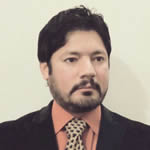
Dr. M Salam Muslim Assistant Professor
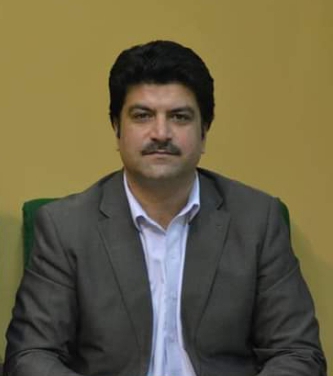
Dr. Nasir Rashid Assistant Professor
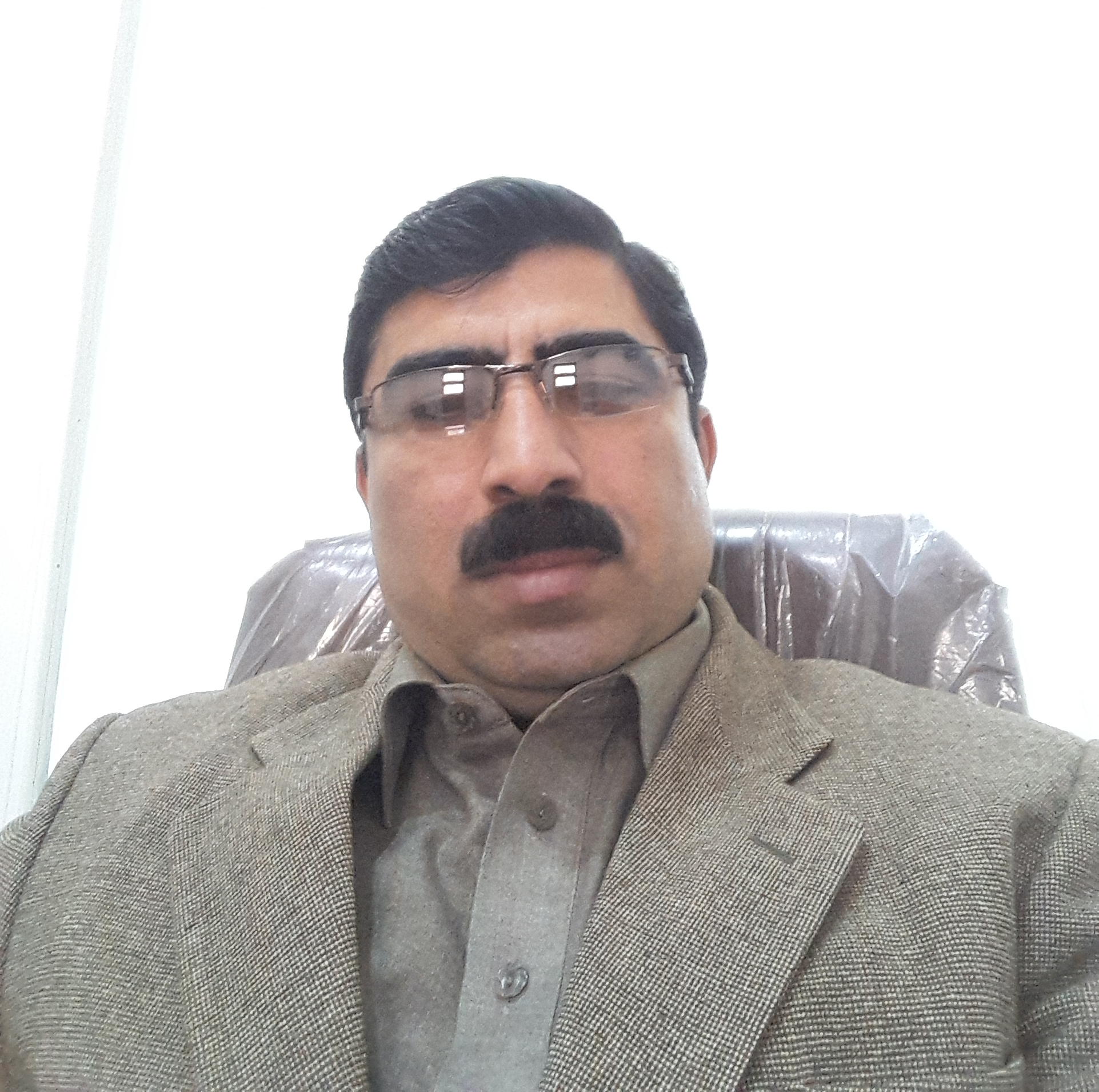
Dr. Muhammad Ilyas Assistant Professor
Visual Computing Research Group (VCRG)

The Visual Computing Research Group (VCRG) is interested in the field of applied research and providing solutions for the real world problems in the field of medicine and education. The group is created to provide an environment for quality research in the areas of image processing and image visualization. Main areas of our research are image processing based solutions in the field of medical imaging and visualization in education.
We always welcome students interested in pursuing their Bachelor, Master and PhD thesis. The students have the choice either to work on their own research topic or a topic assigned by the group
Field of InterestTeam Members
Dr. Engr. Sami ur Rahman Assistant Professor
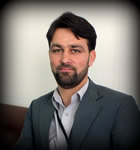
Dr. Fakhrudin Assistant Professor